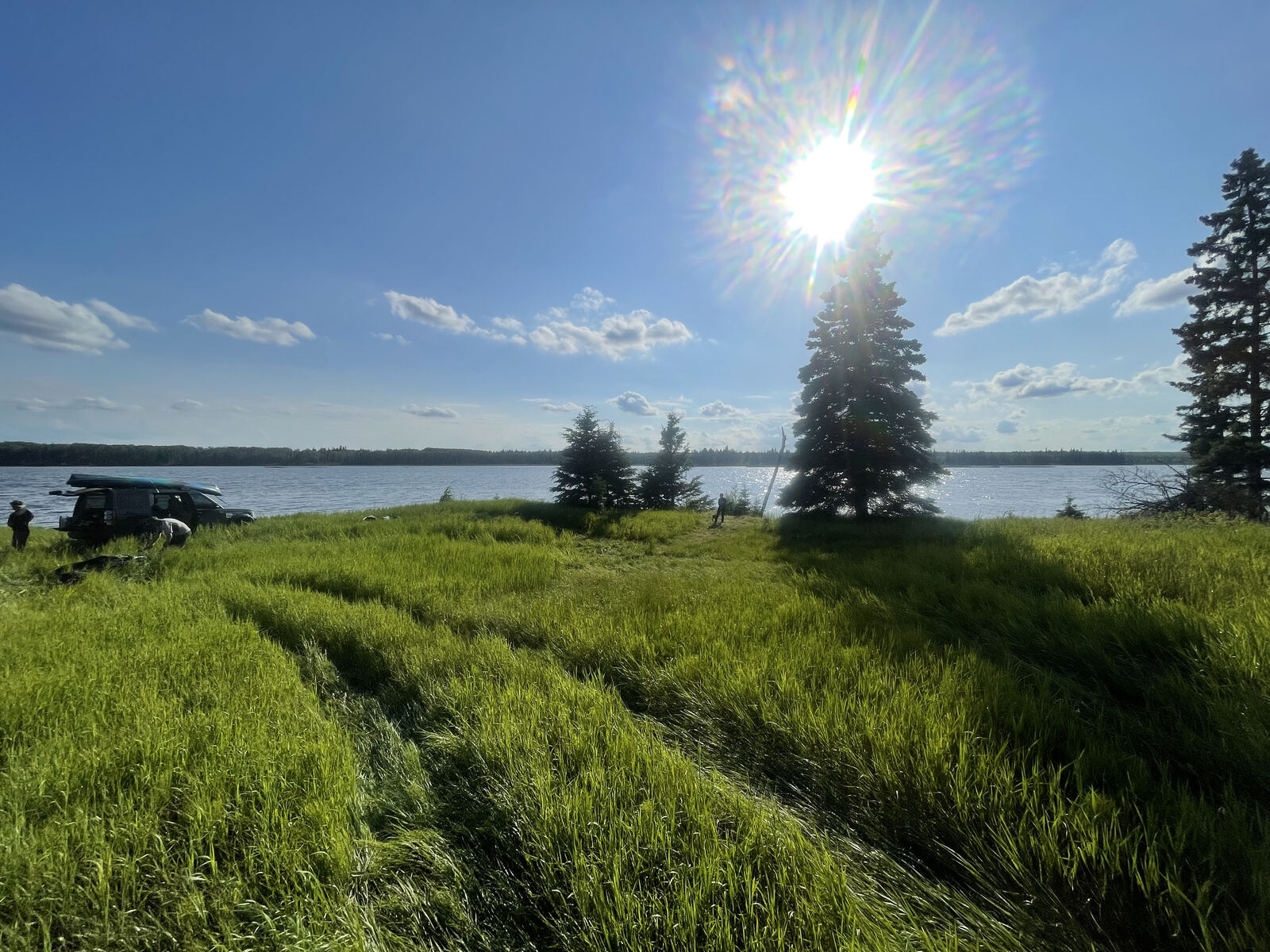
Sun flaring over the meadow grass with the lake beyond

The Journal · Observations from the property

Field Notes

Short essays from a decade of paying attention.

Field Notes · No. 001

The Origin of the Name

As a child of the eighties, now in my forties, I grew up on Ninja Turtles.

They had some catchy slogans, and the best of them was a single word: Cowabunga!

Big River is a small town in north-central Saskatchewan. It sits at the southern end of a long, narrow lake that runs forty-two kilometres north through the boreal forest. The lake is called Cowan Lake.

The first year we made the trip, the two collided. Cowan Lake. Cowabunga. We dubbed the place Cowanbunga, merging the two together, and it has never had another name since.

The town that anchors this corner of the map is worth knowing a little about. Big River calls itself the Gateway to the North, and it earns the title. It sits almost exactly where Saskatchewan changes character: the grain belt ends to the south, and the boreal forest takes over and runs north for hundreds of kilometres. Apart from some cleared farmland and a few natural meadows, the town is surrounded entirely by forest. Prince Albert National Park is only about sixteen kilometres to the east, and the city of Prince Albert is more than a hundred and thirty kilometres away.

The lake has its own story. Cowan Lake was shaped by the dams of the logging era, back when Big River was a lumber boomtown. By 1911 it was home to what was reportedly the largest sawmill in the British Empire. Today the lake's water leaves the north end through the Cowan River and eventually finds the Churchill River, on its long way to Hudson Bay.

So the name is half Saturday morning cartoon and half Saskatchewan geography.

It fits the place better than anything we could have planned.
Field Notes · No. 002

Nature Doesn't Care About Your Plans

One of the first lessons Cowanbunga teaches is that nature doesn't care about your itinerary.

You can spend months planning the perfect trip. You can organize gear, coordinate schedules, buy supplies, build spreadsheets, and check weather forecasts. Then you arrive and discover that a storm has different ideas. Or the mosquitoes are particularly aggressive. Or the road is washed out. Or the lake is rough.

The wilderness doesn't negotiate.

Over the years I've learned that fighting nature is exhausting, but embracing it is liberating. Once you accept that the weather, wildlife, and conditions are beyond your control, you stop trying to manage every variable and start appreciating the experience for what it is.

We're visitors here.

The deer remind us of that. Some years we've watched does emerge cautiously from the tree line with week-old fawns wobbling behind them on impossibly thin legs. We've seen black bears and cubs moving quietly through the forest. Eagles routinely patrol the shoreline, and on one memorable afternoon one swooped down directly in front of camp and pulled a fish from the water with remarkable precision.

Perhaps the most impressive resident is our beaver neighbour. Less than a hundred feet from camp sits an enormous lodge that appears to grow larger every year. The scale of the structure is remarkable when you realize it was built entirely by instinct, persistence, and time.

The wildlife here isn't a tourist attraction. It's simply life continuing around us.

The longer I spend here, the more I realize that we're the unusual part of the landscape.

Field Notes · No. 003

The Camp That Builds Itself

Every year starts the same way.

The trucks arrive. Dust settles. People stretch their legs after the drive. Then, almost immediately, everyone starts working.

No meetings.

No assignments.

No committee.

Someone starts unloading lumber. Someone grabs a weed trimmer. Someone begins assembling the dock. Someone hangs lights. Someone starts a fire.

Within a few hours, a collection of tents and equipment transforms into a functioning village.

What fascinates me is how naturally this happens.

In everyday life we're surrounded by systems, processes, job descriptions, and organizational charts. At camp, none of that exists. There is simply work that needs doing and people willing to do it.

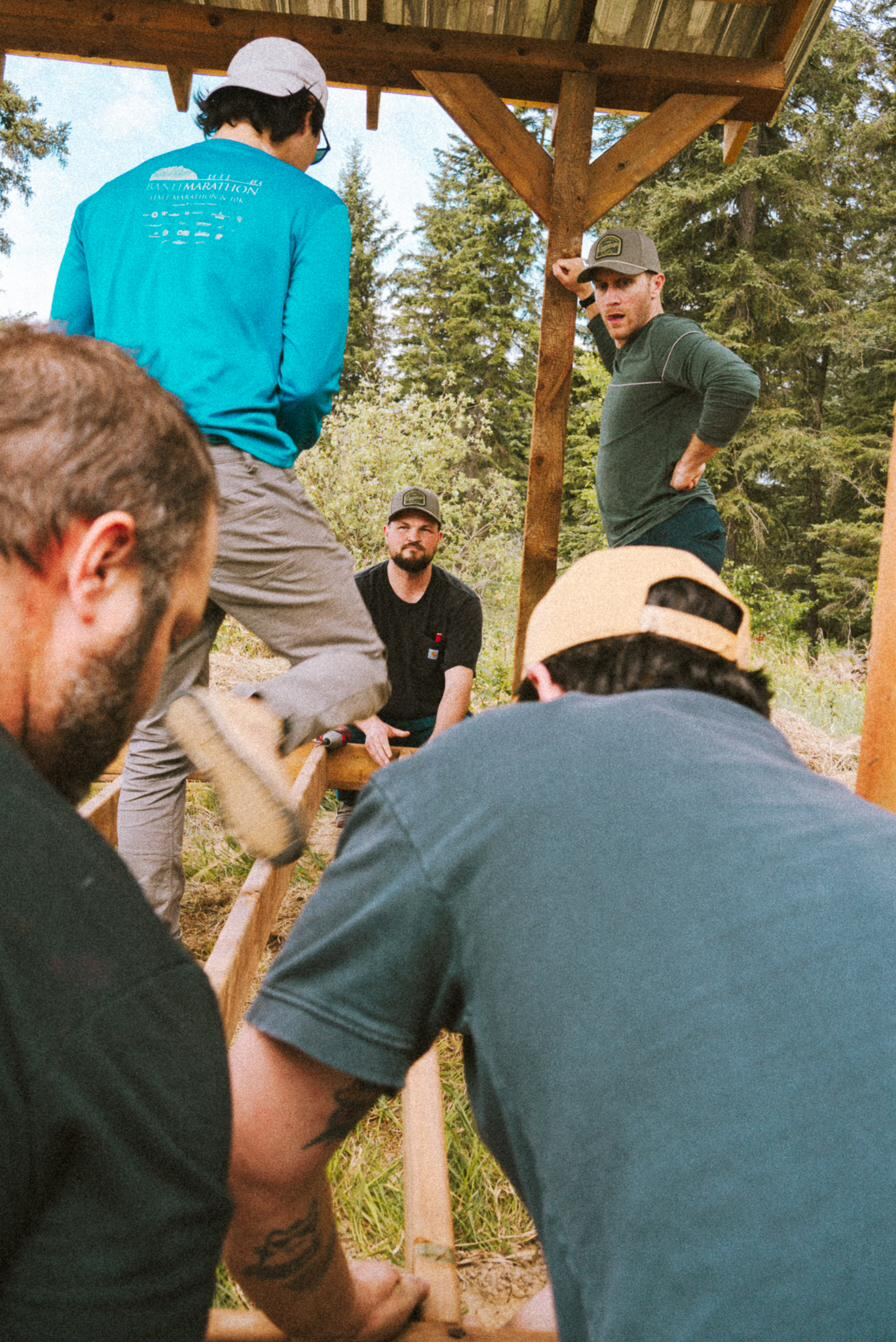
Over the years we've built docks, trails, gathering areas, fire pits, storage systems, and the gazebo that now serves as the heart of camp. Every improvement tells a story because every improvement was built by the people who use it.

The camp doesn't arrive finished.

We create it together every year.

And I think that's one of the reasons everyone feels ownership of the place.

The crew at work raising camp, everyone on tools
No meetings. No assignments. No committee.
Field Notes · No. 004

The Night Belongs to the Fireflies

Most people think the stars are the highlight of the night.

They're wrong.

The fireflies steal the show.

On warm evenings, usually after the sun disappears and the lake becomes perfectly calm, the forest begins to glow. Tiny flashes of green and yellow drift through the darkness like floating embers.

Thousands of them.

You don't notice them all at once. At first it's a single light. Then another. Then hundreds. Eventually the trees appear to pulse with life.

No photograph I've taken has ever done it justice.

There is something almost magical about sitting beside a campfire while the woods themselves seem to illuminate around you. The glow reflects off the grass, dances through the trees, and creates the feeling that you've somehow stepped into another world.

The fireflies arrive quietly every year, never demanding attention.

Yet somehow they become one of the most memorable parts of the trip.

A reminder that some of nature's greatest spectacles are also its smallest.

Field Notes · No. 005

The Day We Rescued a Duck

Not every memorable moment involves adventure.

One year we found a baby duck separated from its family.

Tiny. Vulnerable. Completely lost.

At first we simply watched from a distance. Nature usually works these things out on its own. But as time passed it became clear the little duckling wasn't making its way back to the water and was becoming increasingly distressed.

For a group of grown men who spend their weekends shooting targets, cutting firewood, and operating chainsaws, the scene created an unexpectedly gentle mission.

Everyone immediately switched into rescue mode.

The duckling was carefully guided back toward the shoreline where it could reunite with the water and hopefully reconnect with its family.

The whole event lasted less than an hour.

Yet years later people still talk about it.

I think moments like that reveal something important. Beneath all the jokes, competition, and ruggedness, most people have an instinct to protect things that are smaller and more vulnerable than themselves.

Especially when they're far from home.

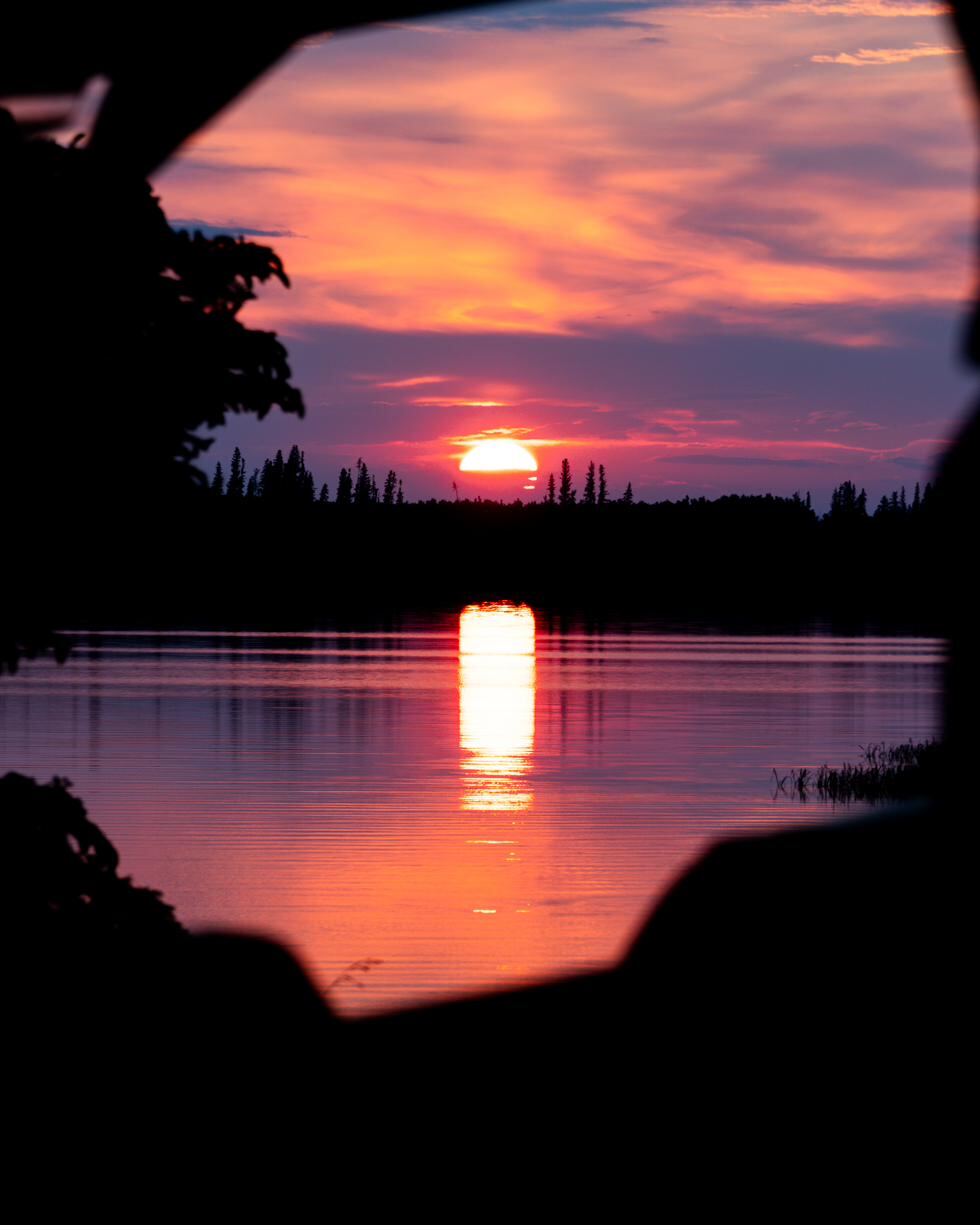
The lake gone perfectly still at dusk, sky mirrored in the water
The lake settles, and the night shift begins
Field Notes · No. 006

The Soundtrack of Cowan Lake

Every place has a soundtrack.

Cowan Lake's begins before sunrise.

The first sounds are usually the loons.

Their calls drift across the water long before anyone leaves their tent. It's difficult to describe the feeling if you've never heard it in person. Part loneliness. Part mystery. Part beauty. It sounds like wilderness itself.

As the day unfolds, new sounds join the mix.

The wind moving through poplar leaves.

The occasional splash of a fish near the dock.

The distant hum of an ATV.

The crackle of a campfire.

The laughter of friends.

Then there are the birds.

Swans glide overhead with surprising grace for creatures so large. Sandhill cranes announce their presence long before you see them. Eagles circle high above the shoreline searching for opportunities.

And every evening, almost like clockwork, our resident muskrat begins his shift.

He travels the same route near the dock, swimming back and forth completely unbothered by whatever chaos the humans have created that day. Music, laughter, construction projects, target practice. It makes no difference.

He simply carries on with his work.

There's a lesson in that somewhere.

Field Notes · No. 007

Why We Keep Coming Back

People often ask why we've been doing this for over a decade.

The easy answer is fishing.

Or campfires.

Or shooting.

Or good food.

But none of those explanations fully capture it.

The truth is that places accumulate meaning over time.

Every year adds another layer.

A new project completed.

A story created.

A friend introduced.

A challenge overcome.

A sunset remembered.

A photo taken.

A tradition continued.

The property itself has become part of our lives. The dock. The gazebo. The trails. The shoreline. The fire pit. Every corner contains memories from previous years.

What started as a camping trip has slowly become something else.

It's become a gathering place.

A reset button.

A reminder that friendship requires time.

A reminder that meaningful things are rarely convenient.

A reminder that some of life's best moments happen when there is no agenda beyond being present.

We arrive as busy professionals, fathers, business owners, and people carrying the weight of everyday life.

For a few days each year, we get to put those things down.

And somehow that simple act keeps us coming back.

For a few days each year,
we get to put those things down.

More notes will be added as the years go on. In the meantime, see the place these were written about in the photo galleries.